
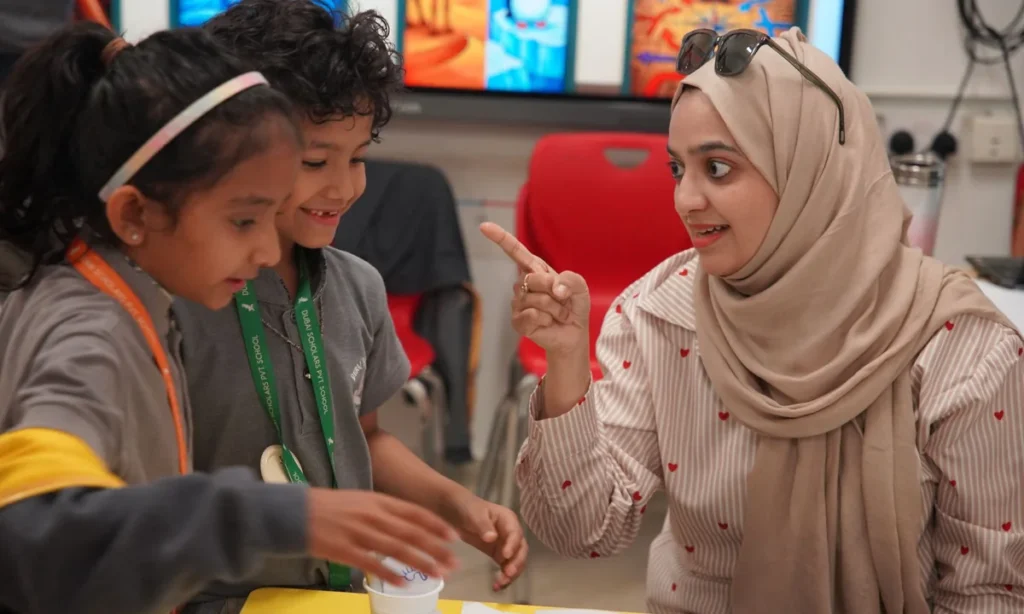
The best sensory play ideas for FS1 and FS2 children use cheap household materials, take ten minutes to set up and give a child something to touch, hear, smell or see that they want to talk about. Below are six activities you can run at home, each with the materials, clear steps, what to watch for and how to adapt it if your child dislikes certain textures or sounds. Safety notes come first, because water, small parts and food-based materials all need an adult close by.
What should you check before you start?
Safe materials and supervision matter more than the activity itself. Whichever of these sensory play ideas you try, keep these rules:
- Stay within arm’s reach near water. Young children can drown in just a few centimetres of water, quickly and quietly. Empty trays and tubs straight after play.
- Size up small parts. Any small object can choke a child under three, and many FS1 children still put things in their mouths. A practical guide used by child-safety services is to avoid items smaller than a D-sized battery.
- Do not use water beads. The US Consumer Product Safety Commission has warned that swallowed water beads can expand inside the body and cause blockages.
- Check food ingredients. Flour, cornflour and food colouring can matter for children with allergies or intolerances. Use only ingredients your child can safely have. If your child still puts things in their mouth, choose the fabric search bin below instead of raw flour or grains.
- Keep food materials clean. Food-based materials such as gloop and playdough are for play, not tasting. Wash hands before and after, clean trays and tools afterwards, and throw used gloop away at the end of the session.
Six sensory play ideas for preschoolers you can set up at home
These sensory activities for preschoolers at home suit children aged roughly three to five. Between them, they cover touch, sound and smell.
1. Cornflour gloop (messy play)
Materials: 2 cups of cornflour, about 1 cup of water, a large tray, an old shirt or apron, a towel.
Steps: Pour the cornflour onto the tray. Add the water slowly and mix with your hands until the gloop feels solid when pressed but runs when lifted. Let your child squeeze it, let it drip and try to roll it into a ball.
What to notice: Does your child describe the change? Words like “hard”, “runny” and “melting” show them thinking about what they feel.
If your child is unsure: Offer a spoon or a stick first, and let them watch you touch it. Never push their hands into it. Of all the messy play ideas for preschoolers, this is one of the easiest to clean, because it wipes away with water.
2. Fabric texture search bin
Materials: a deep plastic tub, large pieces of fabric with different textures (such as fleece, satin, corduroy and towelling) and three or four large, one-piece toys that suit your child’s age and have no small parts that can come off.
Steps: Scrunch the fabric pieces into the tub, hide the toys among them and ask your child to find each toy and say which fabric it was hiding under.
What to notice: Can your child describe where something is hidden (“under”, “next to”), keep searching until they find it, and describe how each fabric feels?
If your child is unsure: Start with only two or three pieces of fabric, and let them watch you search first or use large tongs instead of their hands. Sensory bins are easy to theme, which makes them useful sensory bin ideas for preschool: soft toys hidden in scarves or large vehicles hidden in towels follow the same steps, with the same check that nothing small can come off.
3. Sand and water tray: bury and wash
Materials: a tray of damp play sand, a second shallow tub with a little water, shells or large plastic animals, a soft brush and a small jug.
Steps: Bury the shells in the sand. Your child digs them out with their hands, brushes off the sand, then washes them in the water tub and lines them up to dry.
What to notice: Sand and water play invites comparison. Listen for words like “wet”, “gritty”, “heavy” and “clean”.
If your child is unsure: Offer gloves or a small spade. Keep the water shallow and tip it away as soon as play ends.
4. Scented playdough
Materials: soft playdough, a few safe scents such as a spoon of cinnamon, a drop of vanilla or crushed mint leaves, a rolling pin and cutters.
Steps: Make two or three small balls with different scents. Ask your child to smell each one with eyes closed and guess which is which.
What to notice: Smell is a strong prompt for talk. Your child may link a scent to a memory or a food, which is a natural chance to build vocabulary. Rolling and cutting playdough also works the hand muscles; our Fine Motor Skills Activities guide has more ideas for that.
If your child is unsure: Keep the scents mild and let them smell from a distance first.
5. Tap and listen
Materials: two sturdy containers that sound different when tapped, such as a metal saucepan and a plastic bowl, and a wooden spoon.
Steps: Turn both containers upside down on a mat. Show your child how to tap each one gently with the wooden spoon, then take turns tapping and listening.
What to notice: Can your child say which container sounds louder or deeper, and tap softly or loudly when you ask?
If your child is unsure: If loud sounds upset them, use only the plastic bowl or lay a cloth over the saucepan, and let them control how hard they tap.
6. Feely bag guessing game
Materials: a cloth bag or pillowcase and five everyday objects with clear textures, such as a sponge, a wooden spoon, a sock, a pine cone and a tennis ball.
Steps: Put one object in the bag. Your child reaches in without looking, describes what they feel, then guesses before pulling it out.
What to notice: This tactile play is really a language game. Listen for describing words such as “bumpy”, “soft” and “pointy”.
If your child is unsure: Let them look in the bag first, or use a box with a large hole so their hand is not covered.
Are there sensory play ideas for 3 year olds that need extra care?
Yes. Most sensory play ideas for 3 year olds are the same as for four- and five-year-olds, but with bigger pieces, shallower water and closer supervision, because many three-year-olds still mouth objects. Children in their first school year often meet sand, water and dough every day, and our guide to FS1 Schools in Dubai explains what that first year involves.
What are the benefits of sensory play in early years?
The benefits of sensory play in early years are practical rather than mysterious. When children use their five senses to explore, they get a reason to talk, to compare and to keep trying:
- Language development: children need new words to describe what they feel, hear and smell.
- Fine motor skills: pouring, pinching, squeezing and digging strengthen the small muscles of the hand.
- Self-regulation: slow, repetitive play such as pouring water or squeezing dough can help some children settle and focus.
- Early science and maths: heavy and light, full and empty, wet and dry.
In the British curriculum, this kind of exploration sits within the Early Years Foundation Stage, where sensory and exploratory play is one of the ways children develop across the areas of learning.
Sensory play is ordinary play, not therapy, and it is not a way to test or diagnose a child. Children differ in how much touch, noise or mess they enjoy, and that is normal. If you notice strong, lasting distress with everyday textures or sounds that affects daily life, speak to your child’s teacher or a health professional about their sensory processing, rather than trying to fix it with play.
Sensory activities are also an easy swap for screens, and our Screen Time for Kids article sets out current guidance.
Sensory Play at Dubai Scholars
At Dubai Scholars Private School, FS1 and FS2 children aged three to five follow the EYFS framework, where playing and exploring is one of the characteristics of effective learning. Early Years mornings are planned with most of the time given to play-based, child-led learning, which is where children work with materials, ask questions and try things out. If you would like to see the Early Years classrooms, our admissions team can arrange a School Tour.
Frequently Asked Questions
What is sensory play?
Sensory play is any activity that invites a child to explore using touch, sight, sound, smell or taste, such as squeezing dough or pouring water. The point is exploration and talk, not a finished product.
Why is sensory play important in early years?
It gives young children a hands-on reason to use and learn new words, practise hand control and stay focused on something they find interesting. It also fits the EYFS emphasis on playing and exploring as a way of learning.
What are the benefits of sensory play for preschoolers?
The main benefits are richer vocabulary, stronger fine motor skills, longer concentration and early science and maths ideas such as full, empty, heavy and light, though benefits vary by child.
What sensory activities can I do at home with my preschooler?
Try cornflour gloop, a fabric texture search bin, a sand and water tray, scented playdough, a tap-and-listen game with two sturdy containers or a feely bag guessing game. Use materials your child can safely handle, check for small parts and stay close by, especially near water.